Where the Water Goes
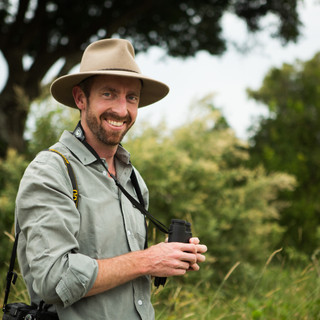
There is something about water that changes the way you experience Africa. It changes the landscape, the temperature, the movement of animals and, ultimately, the entire rhythm of a safari. I was reminded of this again recently when I spent six nights in Botswana, split between two very different places: three nights at Qorokwe in the Okavango Delta, followed by three nights at Mokete in the Mababe Depression.


They are not particularly far apart in the grand scheme of things (just 30 minutes by helicopter), yet the relationship each has with water could hardly feel more different.
In the Okavango Delta, water is simply part of the soul of the place. It is not difficult to find. It is not something you have to search for. You see it everywhere, from broad channels and open pools to smaller stretches of water hidden amongst the vegetation. You can climb into a mokoro and move quietly through it, drive Land Cruisers fitted out with snorkels across channels, watch elephants wade through it and see animals standing ankle-deep in water as they go about their daily lives.
Even where the Delta is dry, there is an unmistakable freshness to it. There is a sense of abundance, of water being readily available and of life being shaped by its presence rather than its absence. It is exactly the sort of landscape that many people picture when they imagine a Botswana safari.

Qorokwe gave us plenty of that experience. The scenery was beautiful, the elephants were exceptional and getting onto the water added an entirely different dimension to the game viewing. There is something about slowing down in a mokoro and allowing the landscape to reveal itself from water level that makes you feel very differently connected to the Delta.


Then we moved to Mokete.
Here, the relationship with water becomes much more complicated.
The Mababe Depression is part of the same broader ecosystem, and water still dictates an enormous amount of what happens here, but rather than being surrounded by it, you become acutely aware of where it is and more crucially where it isn't. This year, interestingly, there is actually a surprising amount of water in the depression. Having visited Mokete three times this year, this was the most water I have seen, and while we were there the levels were still increasing as water gently moved into the depression.
But water is only one half of the equation.
The other is temperature.


During the day, temperatures were regularly pushing into the high 30s, sometimes surprisingly early in the morning, while after sunset the mercury could plunge into single figures. That extraordinary swing creates a rhythm to life in this landscape. Animals are not simply moving because they feel like moving; their movements are closely tied to the temperature, the availability of water, the distribution of food and the need to conserve energy.

You begin to notice this when you spend enough time in the bush. The landscape might look still, but there is an enormous amount happening beneath the surface. As the temperature rises, animals seek shade and water. As the heat eases, movement increases. Predators adjust their behaviour. Prey animals make decisions about where and when they can safely feed. Water becomes a meeting point, a refuge and, at times, a source of competition.
This is what I love about Mokete. It feels raw because you are much more aware of those forces. You feel the heat building during the day. You feel the cold arriving at night. You see how closely wildlife is tied to the remaining water and how quickly the character of the landscape can change as conditions shift.
It is this that is what makes the prospect of next year so interesting. Current predictions suggest that the coming season could be a much drier one, influenced by the return of El Niño conditions. Nobody can predict exactly what the bush will do, and nature has a habit of ignoring our forecasts, but if the Mababe Depression does become significantly drier, it could create a fascinating ecological scenario.
The depression may become increasingly important as one of the remaining sources of water in a much larger landscape. Animals from surrounding dry Mopani dominated areas could begin moving towards it, and as that happens, concentrations of wildlife may increase and so too could the interactions between species and even between individual animals.
For a safari-goer, that prospect is incredibly exciting. For the animals, it is a very different story.
Finding water in a dry landscape is not a luxury. It is survival. The competition around those resources can become intense, and the pressure placed on animals by heat, dehydration and diminishing food and water can be enormous. It is precisely those difficult conditions, however, that can create some of the most dynamic wildlife experiences.
That is why I keep coming back to Mokete.

It is not polished in the traditional sense of the word. It is certainly comfortable, but not overboard luxury – like Botswana can produce. It is not somewhere that tries to hide the fact that you are in a wild environment. It feels gritty, exposed and occasionally quite challenging. You feel the landscape rather than simply looking at it, and you become much more conscious of the fact that we are visitors in a system that is constantly changing around us.
Over these six nights we saw an extraordinary variety of wildlife. More than sixty individual lions, leopards, cheetahs, hundreds of buffalo and plenty of elephants were the obvious highlights, but some of my favourite sightings were actually the smaller and often overlooked animals that appeared after dark. Civet, genet, porcupine, honey badger, African wildcat, serval, Verreaux's eagle owl and marsh owl all made an appearance.
They are not necessarily the sightings that fill a camera’s memory card or dominate a safari marketing website, but they are part of the same story. They are all responding to this landscape and to its changing conditions in their own way.

And perhaps that is what this particular Botswana combination reminded me of most.
Water is never just water.
In the Delta, its abundance creates a sense of freshness, movement and life. In Mababe, its availability, or lack of it, begins to dictate almost everything. Between the two, you get a fascinating glimpse of how an entire ecosystem can be shaped by the presence of something that we so easily take for granted. Around the world we just turn on the tap – and water flows. Out there in the wild it’s a different story…animals battle life and death, each day, to quench their thirst.
I have already started looking at bookings for next year, and it is becoming clear that getting into Mokete may not be particularly easy. There is already considerable interest in the area, and I have a number of bookings confirmed for next year – many of which I will be accompanying.


But if this kind of safari appeals to you, get in touch. We can see what might be possible.
Because if the conditions do unfold as expected, I think Mokete has the makings of something very special. Not because it will necessarily be easy, comfortable or predictable, but precisely because it won't be.
It may be one of those years when the landscape, and the lack of water, writes the safari for us.


Comments