The Reset Button the Safari Industry Craves
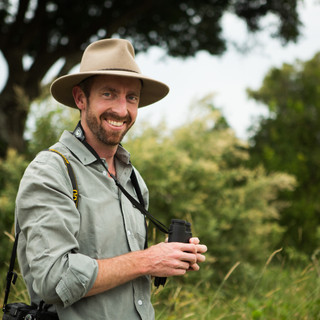
I have just left Gorongosa National Park in central Mozambique, and I am still trying to work out exactly why it affected me as much as it did.

After more than two decades in the safari industry, I have been fortunate enough to experience some of Africa's greatest wilderness areas. I know what a great safari looks like. Or at least, I thought I did. But Gorongosa has made me think again. Because this is not just a story about the restoration of a national park. In many ways, it feels like a reminder of what safari was always supposed to be, and perhaps what parts of our industry have gradually forgotten.
To understand what makes Gorongosa so special, you have to understand what was lost. During the 1960s and 1970s, the park was one of Africa's great wildlife strongholds. An aerial survey recorded around 200 lions, 2,200 elephants and 14,000 buffalo, alongside thousands of zebra, wildebeest, hippo and antelope. Then came Mozambique's civil war. For years, Gorongosa became a battlefield. Infrastructure was destroyed, wildlife was slaughtered for ivory and food, and by the end of the conflict many large mammal populations had declined by more than 90 percent.
It would have been easy to accept that Gorongosa was finished. Instead, in 2004, the Government of Mozambique and the Carr Foundation began an extraordinary restoration project. I was fortunate enough to meet Greg Carr during this trip, and I think that conversation helped me understand why what is happening here feels so different. Here is a man who has poured an extraordinary amount of his own money into saving this park, yet there was no fuss or ceremony. Shorts, T-shirt and driving around in a Jimny (not a fancy Land Cruiser). More importantly, there was a very clear philosophy behind everything he spoke about. Gorongosa could not survive without the support of the people living around it. A national park, he believes, cannot simply be a place for animals while the people outside its boundaries are excluded from the benefits.
That, for me, is where Gorongosa becomes something much bigger than a conservation story.
This is a project of hope.

Wildlife restoration is obviously a huge part of it, but so too are employment, education, agriculture and tourism. The aim is not simply to bring animals back and put a fence around them. It is to build a landscape that the communities around it can value, benefit from and feel proud of. The restoration has already been remarkable, with more than 100,000 large animals counted during an aerial survey in 2018, but the story is still being written.
I was also fascinated by the approach to tourism. Greg spoke passionately about keeping the benefits of tourism within Gorongosa rather than allowing outside companies to arrive, take a slice of the opportunity and send the profits elsewhere. That is why the park has developed its own tourism operation. The camps, lodges and safari experiences are part of the wider restoration project. Your presence as a visitor does not simply feel like another demand being placed on the landscape. You feel, in some small way, that you are contributing to the solution.
And perhaps that is where Gorongosa presents the safari industry with a challenge.
We have become very good at turning safari into something measurable. How many lions did you see? How close did you get to the leopard? Did you see wild dogs hunting? Did you get the photograph? We compare lodges, rooms, food, vehicles and service. We increasingly judge experiences by what we can post afterwards. There is nothing inherently wrong with any of this, but somewhere along the way, we have started treating a safari almost as though it were something to be collected.
Go here. Tick that off. Get the photograph. Move on to the next place.
And that is precisely why I want to say something that may sound slightly strange for someone who has just had an extraordinary experience in a place he would love to see succeed.
Please do not go to Gorongosa simply because it has become the next place you are supposed to go.
Please do not go because it has suddenly appeared on a list of Africa's hottest safari destinations, or because social media has decided that Gorongosa is the next place to be seen. We do not need another safari fad. We do not need a rush of people arriving with a shopping list of animals, expecting the park to deliver enough sightings in three days to justify the price of their holiday.
Gorongosa does not need to become the next Mara.
And, importantly, it should not try to.


The Maasai Mara is one of the greatest wildlife destinations on Earth, and there are few places where you can encounter such extraordinary numbers of large animals in such a short space of time. That is part of what makes the Mara so special. But that is not what Gorongosa offers, and I sincerely hope we never reach a point where people start judging it by that standard.
You can spend a few days in the Mara and have an astonishing concentration of sightings. Gorongosa may ask something rather different of you. It asks you to slow down and immerse yourself in a landscape. It asks you to understand where you are and why the wildlife you are seeing matters. It asks you to appreciate the fact that you are watching a restoration unfold in real time.
And for those who are willing to give it that time, it offers an experience of depth that few other places can.
This is a place for people who are deeply in love with safari and with authentic Africa. For people who understand that the sound of a lion roaring somewhere in the distance can be just as powerful as seeing the lion itself. For people who can find fresh leopard tracks and follow them without feeling disappointed if the animal is never found. For people who can spend hours driving through an extraordinary landscape, looking, listening and wondering what might be around the next corner.
The beauty of Gorongosa is that you do not have to win the day.
You do not have to collect enough sightings to justify your time. You do not have to come home with the photograph. You do not need to be able to tell everyone that you saw the Big Five.
You can simply be there.
And perhaps that sounds like a small thing, but I think we have forgotten how important that can be. Modern safari increasingly comes with pressure. Pressure on guides to find. Pressure on guests to see. Pressure on photographers to produce. Pressure on every day to be better than the last.
Gorongosa offers an escape from that.


You can sit around the campfire in the morning with a coffee, listening to a lion roar somewhere in the darkness, and feel absolutely no need to go racing off in search of it. You can follow tracks for hours and never find the animal. You can spend an entire afternoon watching the light change across a floodplain and come back to camp feeling as though you have experienced something far more meaningful than a hurried list of sightings could ever provide.
That is not to say there are no great wildlife encounters here. There are, and as the restoration continues there will be more. But that is not the point. The wildlife is part of the story. The landscape is part of the story. The people are part of the story. The history is part of the story.
You cannot separate any of them.

And perhaps that is why I found this place almost too big to capture in a photograph. You can take a beautiful image of an elephant, a lion or a painted wolf, but the photograph cannot tell you what this place has been through. It cannot show you what was lost. It cannot explain the extraordinary effort being made to bring it back. It cannot capture the sense that you are witnessing something much bigger than another wildlife sighting.
For me, that is what makes Gorongosa such an important place.


It is restoring wildlife and landscapes, but it is also showing that conservation and tourism can be approached differently. Your visit can contribute to the restoration rather than simply placing another demand on an already pressured wilderness. The money generated through tourism can support the park and the communities around it. You can leave feeling that, in some small way, you were part of something positive.
And that is a rare feeling.
Gorongosa is not perfect, and its challenges are far from over. Mozambique is a country that continues to face enormous hurdles, and there is still an immense amount of work to do. But perhaps that is exactly why the story is so powerful. This is not a finished product. It is not a perfectly polished conservation success story waiting to be packaged and sold.
It is a work in progress.
A living example of what hope, belief and perseverance can achieve.

That is why, for me, Gorongosa feels like the reset button the safari industry craves.
It reminds us that safari is not about how many animals you can collect in a few days. It is not about chasing the perfect photograph, the biggest social media moment or the next destination everyone is talking about. It is about the journey, the uncertainty, the landscape and the feeling of being somewhere that is bigger than you.
So please, do not come to Gorongosa because you think you are supposed to.
Do not come because you have seen everyone else going and want to add it to your own list.
But if you are deeply in love with safari, if you still believe there is something magical about sitting quietly in a wild place with absolutely no idea what might happen next, and if you want to experience authentic Africa at a depth that few places can offer, then come.
Come with time. Come with patience. Come without a shopping list.
And you may just fall in love with safari all over again.


Just saw this on the Gorongosa email. I love what you’ve written and agree, and it’s lovely to read from someone in the industry. I’ll follow up with an email.