A Love Letter to the Wildebeest
I have just returned from a short safari to the Maasai Mara, and strangely, I find myself thinking less about what I saw than about what I heard. Wildebeest. Thousands of them. Moving. For the last nine migration seasons, I have visited the Mara during the migration, and almost every time I leave with the same conflicting emotions. I leave frustrated because I know what the Mara has become in places, but I also leave completely in love with it because, despite all of that, it remains one of the most extraordinary concentrations of life I have ever experienced anywhere in Africa.

The Mara gets a lot of flack, and to be honest, much of it is deserved. It is incredibly easy to find the photographs and videos on social media of too many vehicles, poor behaviour, animals being crowded and the increasingly uncomfortable scenes that have come to define parts of the migration. Videos of guides, and guests behaving poorly, and doing everything they can to ‘chase’ the golden light! The river crossings, in particular, have become the great spectacle and, in the process, we have taken something magnificent and turned it into something dangerously close to an event (it is now even possible to live-stream some of the crossings). But I think there is a problem with judging the Mara only through its worst moments, because step away from the river and something else happens. The Mara breathes, and it is still an extraordinary place.
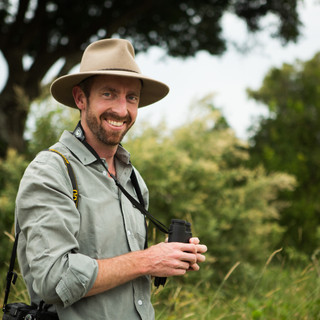
During this latest trip I was guiding a couple from the United States who had brought me along not simply to take photographs, but to add another layer to their experience. They wanted to understand the Mara beyond the sightings. We spent a lot of time talking about conservation, politics, land use, tourism, the difficult decisions being made behind the scenes and some of the uncomfortable realities that rarely make it into the glossy version of safari. I believe my greatest strength is that I have a deep understanding not just of animal behaviour, but of how the safari industry works! They wanted the honest conversations as much as they wanted the photographs, which made for a really interesting few days in the Mara.
And, of course, we went to the river. We were fortunate enough to witness a crossing of a couple of hundred wildebeest, and there is no pretending that it wasn't spectacular. The anticipation builds, the animals gather and something changes in the atmosphere. Then suddenly they are moving, scrambling down the bank and into the water. It is chaotic, visceral and utterly exhilarating. There is a strange energy that takes over the vehicles around you as everyone realises that something is about to happen. It gets the heart racing, and when the first animals finally launch themselves into the river, it is difficult not to be caught up in the excitement.
And then it is over.

What stayed with us, though, was not the crossing. It was the herds.
We spent far more time away from the river, surrounded by wildebeest on a scale that is almost impossible to comprehend. Tens of thousands moving across the plains, stretching towards the horizon. Perhaps 50,000, perhaps 100,000. I honestly don't know, and at that scale counting becomes almost meaningless anyway. You simply stand there and watch. There are animals in front of you, behind you and stretching away in every direction, and gradually you realise that you are not really watching a herd at all. You are watching an entire landscape come alive.


The sound is extraordinary. There is this constant, low rumble of animals moving together, punctuated by hooves, grunts, calls, dust and the occasional alarm. It is difficult to describe because it isn't one particular sound that stays with you; it is the sheer volume of life around you. Then, just as you think the herd has passed, another wave appears and the whole thing begins again. There is something deeply humbling about standing in the middle of that many living creatures, and it reminded me of something I think we have forgotten about the migration.
The migration is not a river crossing. The crossing is merely one moment in a much bigger story. Travel agents read that again if you must, and let it sink in. Please.
Somehow we have allowed the crossing to become the measure of success. Guests arrive in the Mara asking the same question: “Will we see a crossing?” Increasingly, I worry that we have made people believe that if the answer is no, somehow the safari has failed. What a tragedy that would be, because if you spend your entire time looking towards the river, you can miss the greatest spectacle of all: the herds themself.


For nine seasons I have watched this landscape during migration. I have seen extraordinary crossings, terrible crossings, quiet crossings and days when absolutely nothing happens at the river. I have also spent hours watching wildebeest move across the plains with barely another vehicle in sight. And the moments I remember most vividly are often the ones where there was no river anywhere near us. Just wildebeest, endless wildebeest, moving through the Mara in a living tide.
There is something almost prehistoric about it, something that makes you feel very small. You stand there watching an animal that is, by itself, hardly the most glamorous creature on the African plains. It is awkward, noisy and slightly ridiculous-looking. Yet put tens of thousands of them together and they become something magnificent. They become ‘The Migration’.
I think I have fallen in love with that. Not the drama, not the dust cloud for the photograph and not the moment when hundreds of vehicles erupt because a wildebeest has taken a sip of water from the river. It is the wildebeest themselves that I have fallen for: their persistence, their instinct, their movement and their sheer numbers. They are not travelling for us, they are not performing and they certainly don't care whether we are there with cameras. They are simply doing what they have done for years, following an ancient rhythm written into the landscape.


And perhaps that is why I keep coming back to the Mara. Because despite all our interference, despite the pressures, despite the mistakes we continue to make and despite the very real problems that exist here, the Mara can still overwhelm you with life if you give it the chance. It is still, without question, one of the places where you can see more animals in a short period of time than almost anywhere else I have been. That is simply the reality, and I think sometimes we forget it because we have become so focused on everything that is wrong.
So yes, go and see a crossing if the opportunity presents itself. It is an extraordinary thing to witness, and I will never tell anyone otherwise. But please don't make it the reason you come. Come for the herds. Go and find the places where the vehicles thin out and the plains open up. Sit quietly beside them. Watch them move. Listen to them. Watch the dust rise behind thousands of hooves and the calves trying desperately to keep up. Watch the landscape disappear beneath a sea of animals, and then sit there for a little longer.
Because somewhere away from the river, away from the shouting and the radios and the frantic race to get into position, you may find the real magic of the migration. You may suddenly understand that this isn't really about one dramatic moment or one photograph or whether you can say that you saw a crossing. It is about being in the presence of something so much bigger than yourself that for a while, you forget about the vehicles, the cameras, the expectations and everything else that we have layered onto safari.
You are simply standing there, watching one of the great natural spectacles on Earth unfold in front of you.
And after nine seasons, I still find myself completely in love with it.


Comments