Running Wild
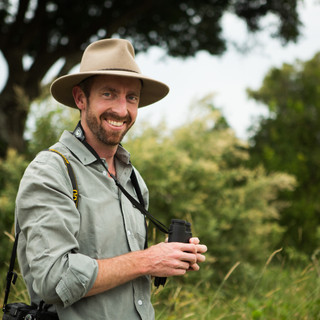

For the past three months, our family has once again been living in the remarkable landscape of Jawai in Rajasthan, at SUJÁN Jawai. It has become something of a second home for us over the years.
Each season we return, the place feels more familiar- deeper, richer, more layered. The granite hills shift with the light, the leopards continue their quiet patrols through the valleys, and the rhythms of village life carry on as they have for generations.
But perhaps the biggest change is not in the landscape. It is in our children.

It takes a village
People often say that it takes a village to raise a child. In Jawai, that idea feels very real.
Our children are not simply growing up with us here — they are growing up with an entire community.
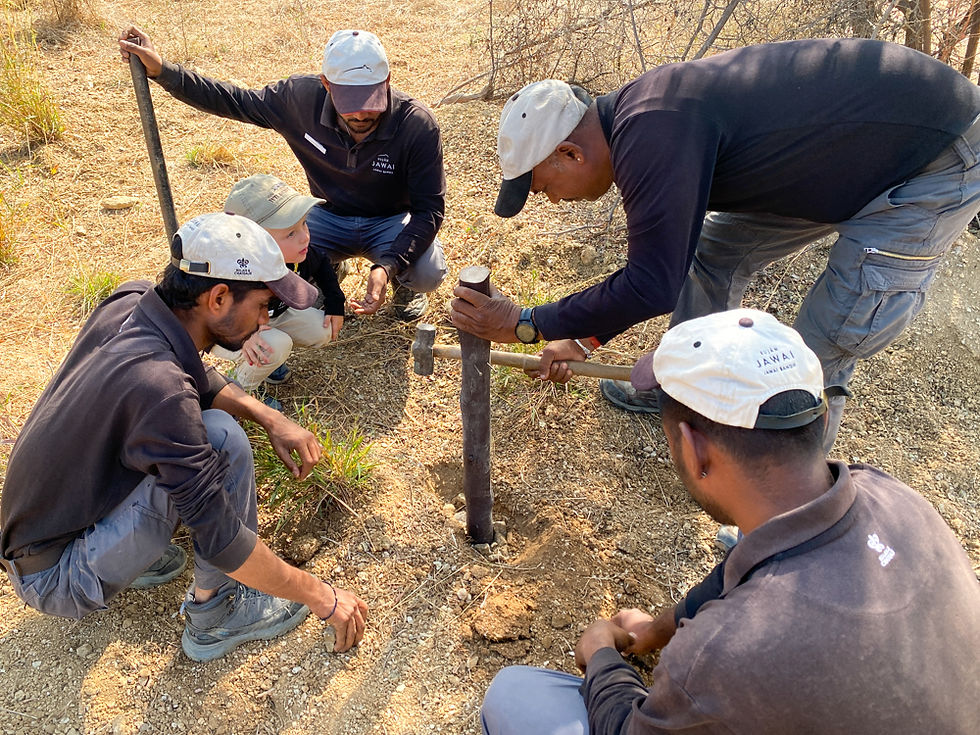
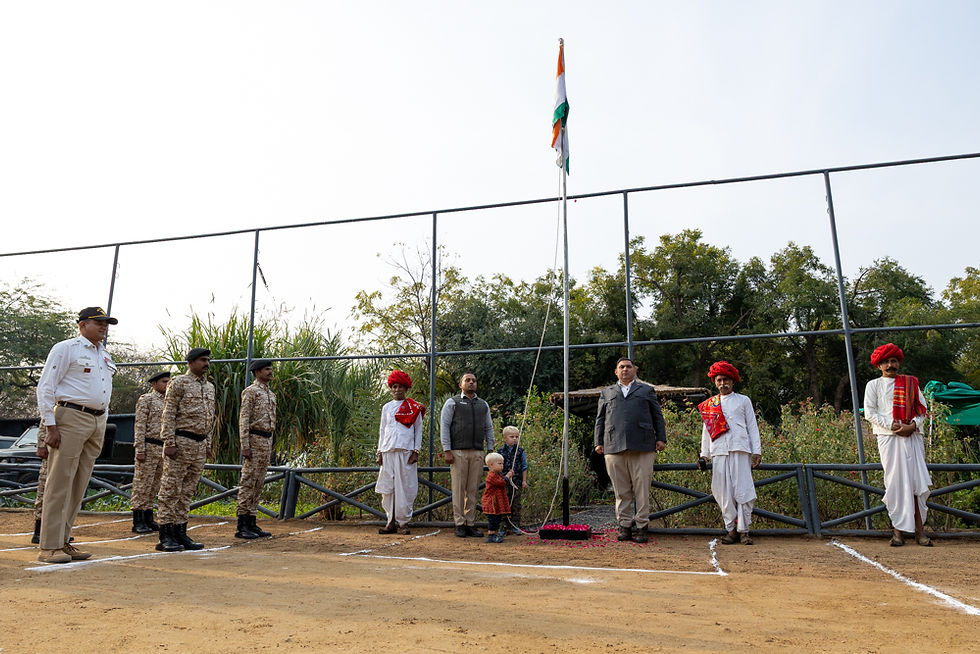
The housekeeping team who greet them every morning.The kitchen staff who sneak them the occasional sweet treat. The maintenance team who patiently answer endless questions about tools and machinery; building Owl Boxes or little chairs.The field guides who help them identify birds and inspecting camera traps.The security team who salute as they race past on the way to the stables.
Everyone, in some way, contributes.
Children absorb far more than we realise. They watch how people interact. They hear stories. They taste new foods. They observe different ways of thinking about the world.
Without even realising it, they are collecting stories.
And I have always believed that life is richer for those who grow up surrounded by stories.

Raising Story Hunters
One of my favourite ideas is that of being a story hunter.
The most interesting people I have met in life are rarely the ones who followed a perfectly predictable path. They are the ones who have wandered a little, explored a little, and allowed the world to leave its mark on them.
So our goal as parents is simple. Expose our children to as many stories as possible.
Different cultures.
Different landscapes.
Different foods.
Different ways of living.
In the process, we hope they grow into curious, thoughtful, well-rounded people , people who understand that the world is a far bigger and more fascinating place than the small bubbles we sometimes create for ourselves.
Seeing the world through children’s eyes
One of the greatest gifts of travelling with children is that it slows everything down.
Game drives that might once have covered twenty kilometres now sometimes cover barely two. And yet we see more.
A family of Peafowl in the grass. The way the water moves across the lake. How berries change colour as they ripen.The call of a francolin that means a leopard may be nearby.
Children have a remarkable ability to remind us that the world is not only about the big sightings.
When we travel with children, we begin to rediscover those things ourselves.

Learning without walls
My wife, being a teacher, has embraced this lifestyle in the most wonderful way.
Almost every day becomes an informal classroom.
Birds become biology lessons. A 300 year old temple lead into conversations about history and religion.A walk through the hills turns into a geology discussion about granite and time.Village celebrations visits open up conversations about culture, livelihoods and community.
People often ask us when our children will attend “proper” school.
And I sometimes smile at the question.
Because right now, their classroom is a wonderful mixture of India, Kenya and South Africa – and who knows where next!
And what better teacher is there than the World?

The strength of travelling as a family
Travelling together as a family is rarely easy.
There are long journeys. Moments of tiredness. Occasional frustrations.
And yes — sometimes we too wish we could simply switch on Netflix, or pull out a tablet, or take the easy route of an afternoon in a shopping centre.
But the challenges are part of the experience.
Travelling together compresses time. It places families into situations where they rely on each other, share discoveries, and navigate unfamiliar environments together. We make communal decisions, and can share ideas and values.
Those shared experiences create bonds that are difficult to replicate in ordinary life.
You don’t just visit a place.
You live it…together.

Why families should travel
If there is one lesson we have taken from these months in Jawai, it is this:
Families should travel.
Not necessarily in grand or extravagant ways. But intentionally.
Children are never too young to experience the world. At every age they absorb something different — a sound, a smell, a feeling, a moment that quietly becomes part of who they are.
Years later, those memories often become the stories that shape them.
And the stories that shape families.
Helping families create those experiences is something that has become increasingly important to us at Adam Bannister Wildlife. Designing journeys that allow families to explore wild places together — Africa, India, or beyond — is something we care deeply about.
Because there is a big difference between travelling – and going on a holiday.
Travelling becomes part of a family's story.


Barefoot
A few days ago someone asked us a question.
They had noticed that our children are almost always running around without shoes.
Weren’t we worried, they asked, about spiders, scorpions or snakes?
My wife and I looked at each other for a moment and smiled.
Of course those things exist.
But great stories rarely come from walking carefully on paved paths.
They come from feeling the earth beneath your feet.
From climbing rocks.
From getting dusty.
From falling over.
From running wild.
Children today are often pushed to grow up too quickly — surrounded by screens, constant noise, and pressures that belong more to adults than to childhood.
Out here, we try to keep things simpler.
To keep them grounded.
And sometimes the best way to stay grounded…
is simply to take off your shoes.
And Run wild.

If travelling with your family ( with purpose, curiosity and a sense of adventure ) sounds appealing, I would love to help design something truly special. After all, the greatest journeys are the ones that become part of your family’s story.


Comments